
Private Label Sex Toys in 2026: What B2B Buyers Should Know Before Launching a Brand
September 28, 2026
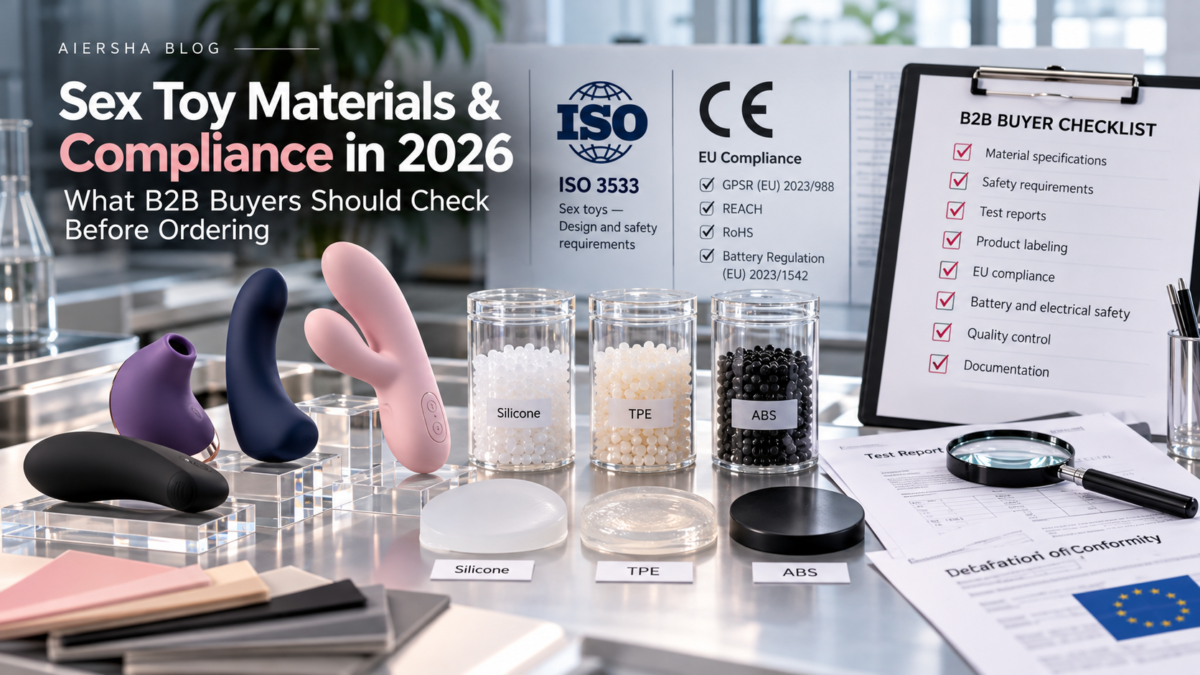
Choosing a sex toy manufacturer involves more than comparing prices, designs and minimum order quantities. For B2B buyers, understanding product materials, safety requirements and compliance documentation is an essential part of responsible sourcing.
Whether you are launching a private label brand, expanding a wholesale assortment or developing a new OEM or ODM project, the materials and technical specifications of your products can affect product performance, customer expectations, regulatory obligations and long-term business risk.

Material selection and product evaluation are important steps in responsible B2B sourcing.
What Should B2B Buyers Check Before Ordering Sex Toys?
Before placing an order, B2B buyers should verify the product's material specifications, intended use, applicable safety requirements, available test reports, product labeling, traceability information and quality control procedures.
A supplier's general claim that a product is "safe", "premium" or "certified" should not replace documentation relevant to the exact model and target market.
Understanding Common Sex Toy Materials
Silicone, thermoplastic elastomers (TPE) and acrylonitrile butadiene styrene (ABS) are among the materials commonly encountered in adult wellness products. They differ in flexibility, processing methods, surface characteristics and potential applications.
| Material | Typical characteristics | What buyers should verify |
|---|---|---|
| Silicone | Flexible elastomer available in different formulations and hardness levels | Exact formulation, surface finish, relevant chemical testing and intended contact conditions |
| TPE | Flexible thermoplastic material available in a range of softness and elasticity | Composition, additives, cleaning guidance, chemical testing and material stability |
| ABS | Rigid engineering plastic commonly used for housings and structural components | Material grade, surface finish, durability, chemical restrictions and assembly quality |
Material names alone do not establish whether a finished product is safe. Safety depends on the specific formulation, manufacturing process, product design, foreseeable use and supporting evidence.
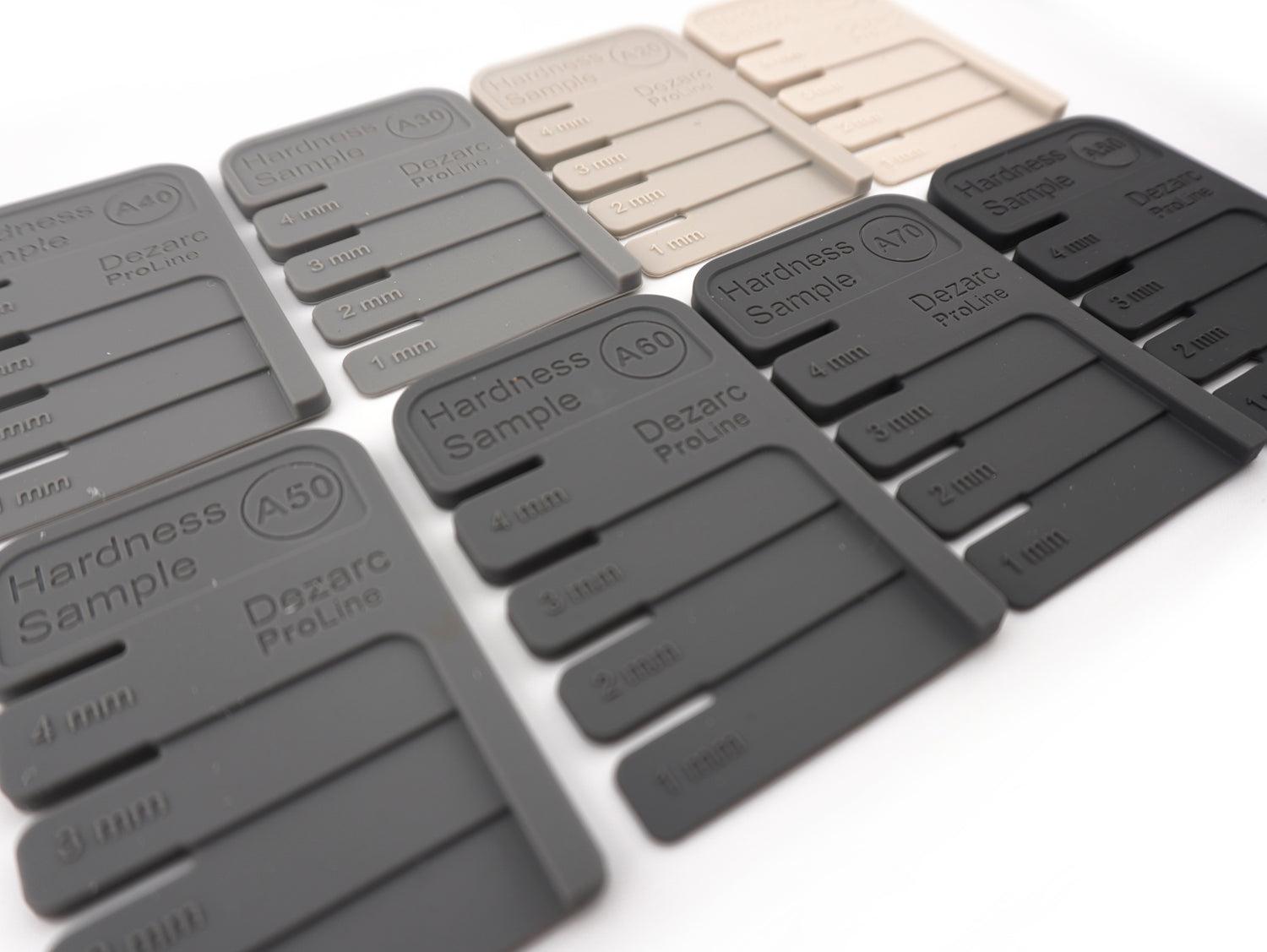
Silicone, TPE and ABS offer different properties. Buyers should evaluate the specific material formulation and intended application.
Silicone: What Should Buyers Ask?
Silicone is widely used in flexible adult wellness products, but the term covers different formulations and manufacturing processes.
Buyers should ask suppliers to identify the material specification and provide relevant documentation for the finished product or applicable components.
- What type and grade of silicone is used?
- Are there material specifications or supplier declarations?
- What chemical or physical tests have been performed?
- Do the reports identify the actual material or product?
- What cleaning and storage instructions apply?
- Have colorants, coatings and other relevant components been considered?
Terms such as "medical-grade" should not be used as substitutes for evidence. Buyers should request clarification of the claim and its relevance to the product's intended use.
TPE: Flexibility and Formulation Matter
TPE refers to a family of thermoplastic elastomer materials rather than a single standardized composition.
Different formulations can have different properties, including softness, elasticity, surface feel and resistance to particular environmental conditions.
For TPE products, buyers should clarify the formulation, relevant additives, recommended cleaning methods and available chemical safety information.
A supplier should also explain how the material is expected to perform under the product's intended conditions of use and storage.
ABS: More Than an External Housing
ABS is frequently used for rigid components, including electronic product housings, handles and structural parts.
When evaluating an ABS-based product, buyers should look beyond the material name and consider:
- Housing construction and durability
- Edges, seams and surface finish
- Resistance to foreseeable mechanical stress
- Battery and charging compartment design
- Assembly consistency
- Applicable chemical and electrical safety requirements
The finished product should be assessed as a complete assembly rather than as a collection of individually acceptable materials.
What Is ISO 3533 and Why Does It Matter?
ISO 3533:2021 is an international standard addressing design, material safety and user information requirements for manufactured sex toys intended for direct contact with genitalia or the anus.
For manufacturers and buyers, it provides a useful technical reference for evaluating certain product risks and safety considerations.
However, referencing ISO 3533 is not the same as demonstrating that a particular product has been independently certified. Buyers should ask what assessment or testing has actually been completed and which product versions it covers.
The standard's scope also matters: it does not automatically cover every adult wellness product or accessory.
Understanding EU Product Safety Requirements in 2026
The European Union's General Product Safety Regulation (EU) 2023/988, commonly known as the GPSR, has applied since December 13, 2024.
It establishes a general product safety framework for consumer products placed on the EU market, including relevant risks not already addressed by more specific EU product legislation.
For B2B buyers sourcing from outside the EU, important considerations include:
- Product identification and traceability
- Manufacturer and responsible economic operator information
- Appropriate risk assessment and technical documentation
- Safety instructions and warnings where required
- Product-specific requirements for the target market
- Processes for handling safety issues and corrective actions
Importers and other economic operators have obligations depending on their role in the supply chain. A manufacturer's documentation can support compliance work, but does not automatically eliminate the importer's responsibilities.
Do All Sex Toys Need CE Marking?
No. CE marking is not automatically required for every sex toy simply because it is an adult wellness product.
CE marking applies where specific EU harmonization legislation requires it. Depending on the product, relevant rules may concern electrical equipment, electromagnetic compatibility, radio functionality or other regulated characteristics.
A non-electronic product and a rechargeable Bluetooth-enabled device may therefore require different compliance assessments.
Before accepting a CE declaration, buyers should confirm which legislation applies, whether the declaration covers the actual product and whether the supporting technical documentation is available.
REACH, RoHS and Chemical Documentation
Chemical compliance should be assessed according to the materials, components and intended market.
REACH
The EU REACH framework regulates chemical substances and includes restrictions and information obligations that may be relevant to materials used in consumer products.
Buyers should request relevant material information and testing where appropriate, especially when evaluating formulations, additives, coatings or components with prolonged skin contact.
RoHS
RoHS restricts certain hazardous substances in electrical and electronic equipment within its scope.
For electronic adult wellness products, buyers should establish whether RoHS applies and obtain suitable product-specific compliance evidence.
A generic laboratory report for a different model or component should not be treated as proof of compliance for every product in a supplier's catalog.
Battery and Electrical Safety
Rechargeable adult wellness products introduce additional considerations involving batteries, charging systems, electronic controls and product construction.
Depending on the product, buyers may need to review:
- Battery type and specifications
- Charging method and connector design
- Protection against foreseeable electrical faults
- Applicable transport documentation
- Instructions for safe charging and storage
- Relevant EU battery and electronic equipment obligations
- Radio-related requirements where wireless connectivity is included
EU battery legislation is also evolving. Buyers planning products for future distribution should confirm which requirements apply at the intended date of market placement, rather than relying only on older product specifications.
EU Battery Regulation: What Changes in 2027?
Regulation (EU) 2023/1542 introduces requirements covering batteries and waste batteries, including sustainability, labeling and battery removability and replaceability.
Under Article 11, certain battery removability and replaceability requirements are scheduled to apply from February 18, 2027.
The regulation also provides specific exceptions. These may be relevant, under defined conditions, to appliances designed for use in wet environments and intended to be washed or rinsed.
For manufacturers and B2B buyers of waterproof or water-resistant adult wellness devices, this is an important point to investigate during product planning.
However, a waterproof product is not automatically exempt. The applicability of an exception depends on the product's design, intended use and the legal conditions in force when it is placed on the market.
Buyers should therefore verify the applicable requirements, including relevant EU guidance and subsequent regulatory amendments, before confirming future production specifications.
Which Documents Should Buyers Request?
The appropriate documentation depends on the product, its features and the target market. The following checklist can help structure a supplier discussion.
| Document or information | Purpose |
|---|---|
| Product specification sheet | Identify materials, dimensions, functions and components |
| Material declarations | Understand the material formulation and relevant supplier claims |
| Relevant laboratory test reports | Review evidence for specified chemical, mechanical or electrical properties |
| EU Declaration of Conformity, where required | Identify applicable EU legislation and declared conformity |
| Safety and risk documentation | Understand identified hazards and mitigation measures |
| Labeling and instructions | Check warnings, identification and market-language requirements |
| Batch or model identification | Support product traceability |
| Quality control specifications | Define inspection criteria and acceptance expectations |
A useful verification question is: Does this document clearly apply to the exact product, materials, components and version I intend to order?
Why Quality Control Matters Before Mass Production
Product documentation and laboratory testing are important, but they do not replace consistent manufacturing and quality control.
Before approving a large order, buyers should agree with the supplier on measurable inspection criteria.
Depending on the product, these may include visual inspection, dimensions, functional testing, charging performance, packaging checks and verification of labeling.
Sample approval is particularly important for OEM and ODM projects because customization or design changes can affect the final product.

Quality control specialist inspecting an adult wellness product sample and technical documentation before mass production
How Do Materials and Compliance Affect OEM and ODM Projects?
At AIERSHA, OEM projects begin with existing catalog products that can be customized with available branding options, while ODM projects begin with a buyer's concept and involve the development of a new exclusive product.
For an OEM / private label project, buyers should confirm whether the available documentation covers the selected product and any proposed changes.
For an ODM project, material selection, product design, prototype evaluation, testing and documentation should be considered throughout development rather than postponed until production is complete.
Learn more in our OEM vs. ODM Sex Toys buyer guide.
A Practical Pre-Order Checklist for B2B Buyers
Before placing a purchase order, use these questions to identify potential gaps:
- Have I confirmed the exact product model and material specifications?
- Have I clearly identified the countries where the product will be sold?
- Do I know which regulations apply to the finished product?
- Are the available reports relevant to the product being ordered?
- Have I checked the labeling, warnings and instructions?
- Have I reviewed a physical sample?
- Are the quality control criteria documented?
- Have the manufacturer and importer responsibilities been clarified?
- Are product traceability and after-sales procedures defined?
- Have I confirmed any remaining compliance questions before mass production?
These steps can help buyers make more informed sourcing decisions and reduce avoidable uncertainty during product development, importing and distribution.
Materials and Compliance Discussions with AIERSHA
AIERSHA works with B2B buyers across wholesale, OEM/private label and ODM manufacturing projects.
When contacting AIERSHA about materials or compliance documentation, buyers should identify the products of interest, intended destination markets and any specific testing or documentation requirements.
This allows the relevant product information and project requirements to be discussed before an order is confirmed.
Frequently Asked Questions
Planning an OEM, ODM or Wholesale Project?
Share your product requirements, target market, expected order quantity and documentation needs with AIERSHA. Clear project information helps establish the next steps for sourcing and manufacturing.
Sources & Further Reading
This article draws on official regulatory information, international standards and AIERSHA's published manufacturing service information. The references below are provided to help B2B buyers verify relevant requirements and explore individual topics in greater detail.
- ISO 3533:2021 – Sex Toys: Design and Safety Requirements – International Organization for Standardization (ISO).
- Regulation (EU) 2023/988 – General Product Safety Regulation – European Union.
- CE Marking – European Commission – Requirements and responsibilities for CE marking.
- Understanding REACH – European Chemicals Agency (ECHA).
- REACH Guidance Documents – European Chemicals Agency (ECHA).
- Directive 2011/65/EU – Restriction of Hazardous Substances (RoHS) – European Union.
- Regulation (EU) 2023/1542 – Batteries and Waste Batteries – European Union.
- European Commission Guidance on Battery Removability and Replaceability – European Commission, 2025.
- Delegated Regulation on Portable Battery Removability and Replaceability – European Commission, July 2026.
- AIERSHA – OEM, ODM and Wholesale Manufacturing Services – Official AIERSHA company information.
Regulatory requirements depend on the product, its features and the destination market. This article provides general B2B sourcing information and does not constitute legal advice. Readers should verify the current legislation and applicable requirements before making compliance decisions.
AI Transparency: This article was prepared with the assistance of artificial intelligence using publicly available sources and official AIERSHA company information. References are provided for transparency and independent verification.