Is the Hong Kong Adult Expo Still Worth Visiting? AIERSHA’s 2026 B2B Field Report
September 10, 2026
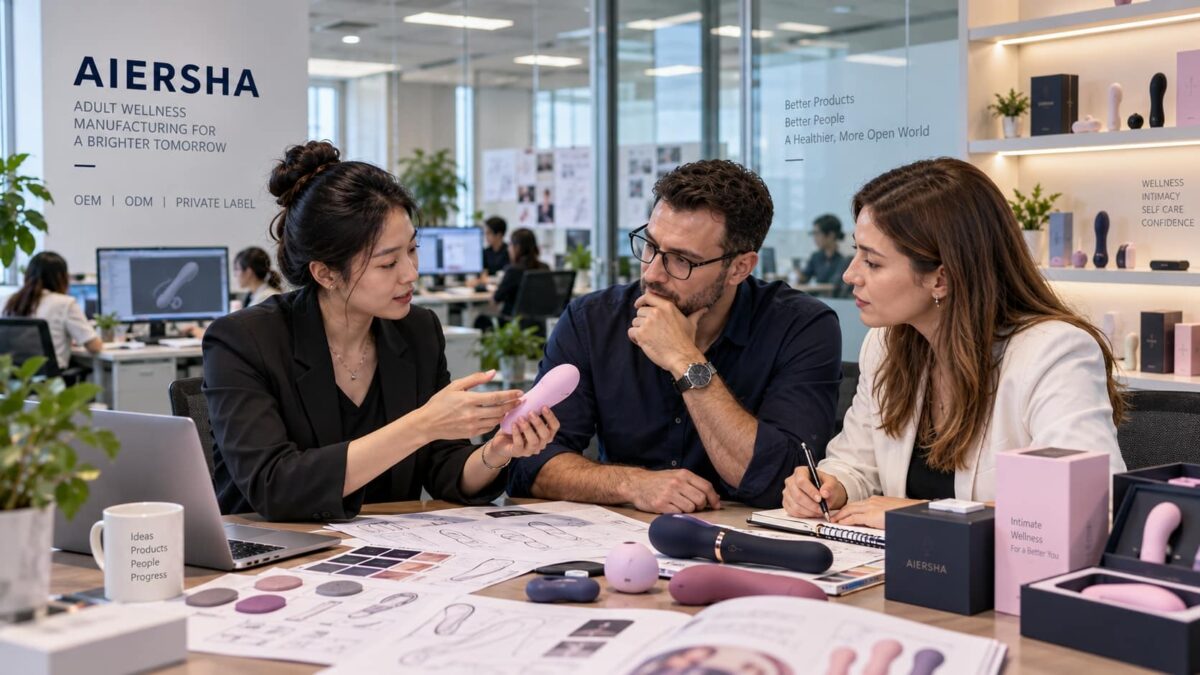
For brands, wholesalers and retailers planning to source or develop adult wellness products, one of the first decisions is whether to use OEM or ODM manufacturing. The two models can look similar, but they offer very different levels of product development, customization, investment and speed to market.
What Is the Difference Between OEM and ODM Sex Toys?
OEM sex toy manufacturing is generally the better choice when a buyer wants to develop a product according to its own specifications, design requirements or technical concept. The manufacturer provides the production expertise needed to turn those requirements into a manufacturable product.
ODM sex toy manufacturing, by comparison, starts with an existing product or product platform developed by the manufacturer. Buyers can typically select available customization options such as branding, colors or packaging and bring the product to market without developing everything from the beginning.
In simple terms: OEM offers greater product differentiation and development flexibility, while ODM can provide a faster and less complex route to market.
OEM vs. ODM Sex Toys at a Glance
| Factor | OEM | ODM |
|---|---|---|
| Starting point | Buyer concept or specifications | Existing manufacturer product or platform |
| Product development | Usually more extensive | Usually limited or already completed |
| Customization | High | Depends on available options |
| Tooling | May require new molds or tooling | Existing tooling may be available |
| Development investment | Typically higher | Typically lower |
| Time to market | Usually longer | Usually faster |
| Best suited for | Differentiated or custom products | Faster launches and proven product concepts |
The exact MOQ, cost and production timeline depend on the product, materials, electronics, tooling and level of customization required. Buyers should therefore request project-specific information rather than relying on a single standard figure.
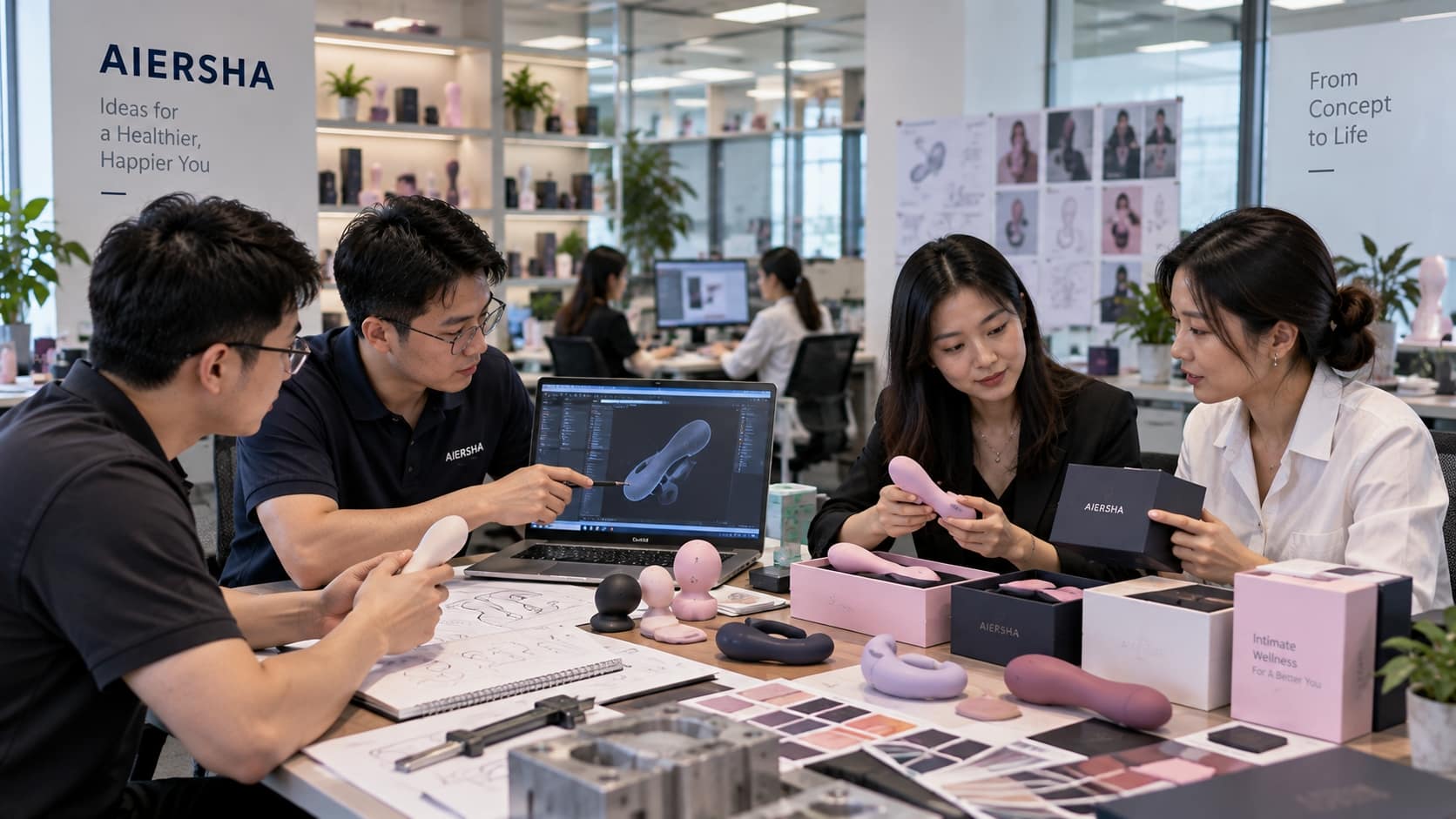
Product development team reviewing OEM and ODM adult wellness products, designs and packaging
What Is OEM Sex Toy Manufacturing?
OEM stands for Original Equipment Manufacturer. In an OEM project, the buyer normally brings a product idea, specifications or specific requirements to the manufacturer.
Depending on the project, this may involve decisions about:
- Product shape and dimensions
- Functions and operating modes
- Materials and surface characteristics
- Motors, batteries and electronic components
- Colors and finishes
- Logo and branding
- Packaging
- Tooling and molds
- Testing and quality requirements
The manufacturer evaluates whether the concept can be produced reliably and then supports the project through development, sampling, testing and mass production.
OEM is therefore particularly relevant for companies that want to create a more distinctive product instead of competing primarily with products already widely available in the market.
What Is ODM Sex Toy Manufacturing?
ODM stands for Original Design Manufacturer. Here, the manufacturer has already developed the underlying product or platform.
A B2B buyer selects a suitable product and then discusses which customization options are available. Depending on the product, these may include:
- Brand logo
- Product color
- Packaging design
- User manuals
- Accessories
- Product bundles or sets
- Other available product-specific modifications
Because the core product has already been developed, ODM can reduce development complexity and shorten the path between product selection and market launch.
This makes ODM particularly interesting for retailers, distributors, e-commerce sellers and brands that want to expand their product range without starting a completely new development project.
What Are the Main Differences Between OEM and ODM?
1. Product Development
The most important difference is where the product begins.
With OEM, the project begins with the buyer's requirements or concept. With ODM, the starting point is usually an existing product developed by the manufacturer.
This difference affects almost every other part of the project, including cost, MOQ, tooling, development time and customization possibilities.
2. Customization
OEM generally offers more extensive customization because the product is being developed around specific buyer requirements.
ODM customization is normally based on what can be changed within an existing design or manufacturing platform.
However, buyers should not assume that every OEM project requires a completely new product or that every ODM product allows only a logo change. The actual scope should always be confirmed with the manufacturer.
3. Tooling and Molds
A new product shape or mechanical design may require dedicated tooling or molds. This increases both the initial investment and development time.
An ODM product may already have production tooling available, which can remove one of the major development stages.
Before paying for new tooling, B2B buyers should clarify costs, modification rules, maintenance and any applicable ownership or usage rights with the manufacturer.
4. MOQ
Minimum order quantity is another important consideration when comparing OEM and ODM.
There is no universal MOQ for every adult wellness product. MOQ can be affected by the product itself, material, components, custom colors, packaging, electronics and whether new production processes or tooling are required.
A buyer testing a new market may therefore prefer an existing product with fewer modifications, while an established brand may accept a larger initial commitment in exchange for greater differentiation.
5. Cost
OEM projects can involve additional development expenses such as engineering, prototypes, molds, tooling or product-specific testing.
ODM can reduce some of these initial costs because the underlying product has already been developed.
However, the lowest initial development cost does not automatically make ODM the best commercial choice. Buyers should also consider differentiation, expected sales volume, target positioning and long-term product strategy.
6. Lead Time and Time to Market
If speed is the main priority, ODM can often offer an advantage because several development stages have already been completed.
OEM projects may require concept evaluation, engineering, prototypes, revisions, tooling, testing and pre-production confirmation before mass production begins.
For this reason, buyers should discuss both sample lead time and mass-production lead time before committing to a launch date.
7. Branding and Packaging
Both OEM and ODM projects can potentially support private-label branding, but the available options depend on the product and order.
Branding can extend beyond putting a logo on the product. For B2B buyers, the complete presentation may include product colors, packaging, manuals, accessories and other elements that create a consistent retail experience.
When Should a Buyer Choose OEM?
OEM is usually worth considering when product differentiation is a major part of the business strategy.
It may be suitable if you:
- Have your own product concept or technical requirements
- Need significant changes to shape, functions or components
- Want a product that is more difficult for competitors to replicate through standard sourcing
- Are prepared for a longer development process
- Can support the development and tooling investment required by the project
- Plan to build a longer-term product line around your brand
For established brands, OEM can provide greater control over how a product fits into a wider portfolio.
When Should a Buyer Choose ODM?
ODM may be the more practical solution when the priority is getting a product to market efficiently rather than developing a completely new product.
It can be suitable if you:
- Want to launch faster
- Prefer an existing product platform
- Want to test a new category or market
- Need private-label branding without extensive product development
- Want to reduce initial development complexity
- Are expanding an existing wholesale or retail assortment
For new brands in particular, ODM can also provide an opportunity to learn which categories perform well before investing in more extensive custom development.
Can OEM and ODM Be Combined?
Yes. In practice, the boundary between OEM and ODM is not always absolute.
A buyer may start with an existing manufacturer platform but request more substantial changes than standard private labeling. Alternatively, a company may launch initial products through ODM and later move toward deeper OEM development after validating demand.
For B2B buyers, the more useful question is therefore not simply “OEM or ODM?” but:
How much product development and customization does this project actually require?
What Should Buyers Ask an OEM/ODM Manufacturer?
Before choosing a manufacturing partner, buyers should evaluate more than the product catalog or unit price.
Useful questions include:
- Are you the manufacturer or a trading company?
- Which parts of product development are handled in-house?
- What customization options are available for this product?
- What is the MOQ for the standard and customized versions?
- Does customization require new tooling?
- What are the expected sampling and production timelines?
- Which materials are used?
- How are products tested during development and production?
- Which compliance documents are available where applicable?
- How is quality control handled before shipment?
- What private-label packaging options are available?
- Which shipping terms and logistics options can be supported?
A professional supplier should be able to discuss these points before mass production rather than leaving important questions until the final stages of an order.
How Does an OEM/ODM Sex Toy Project Typically Work?
Although every project is different, a typical B2B development process follows several stages:
- Requirement discussion: Define the target product, market, functions, customization and expected quantities.
- Product or solution selection: Decide whether an existing ODM platform is suitable or whether deeper OEM development is required.
- Quotation: Confirm the commercial scope, customization requirements and applicable development costs.
- Sampling or prototyping: Evaluate the product before mass production.
- Revisions and confirmation: Finalize product specifications, branding and packaging.
- Mass production: Manufacture the approved product according to the confirmed requirements.
- Quality control: Inspect and test the production before shipment.
- Shipping: Prepare the goods and required documentation for the agreed logistics method.
The more clearly requirements are defined at the beginning, the easier it is for both buyer and manufacturer to evaluate feasibility, costs and timelines.
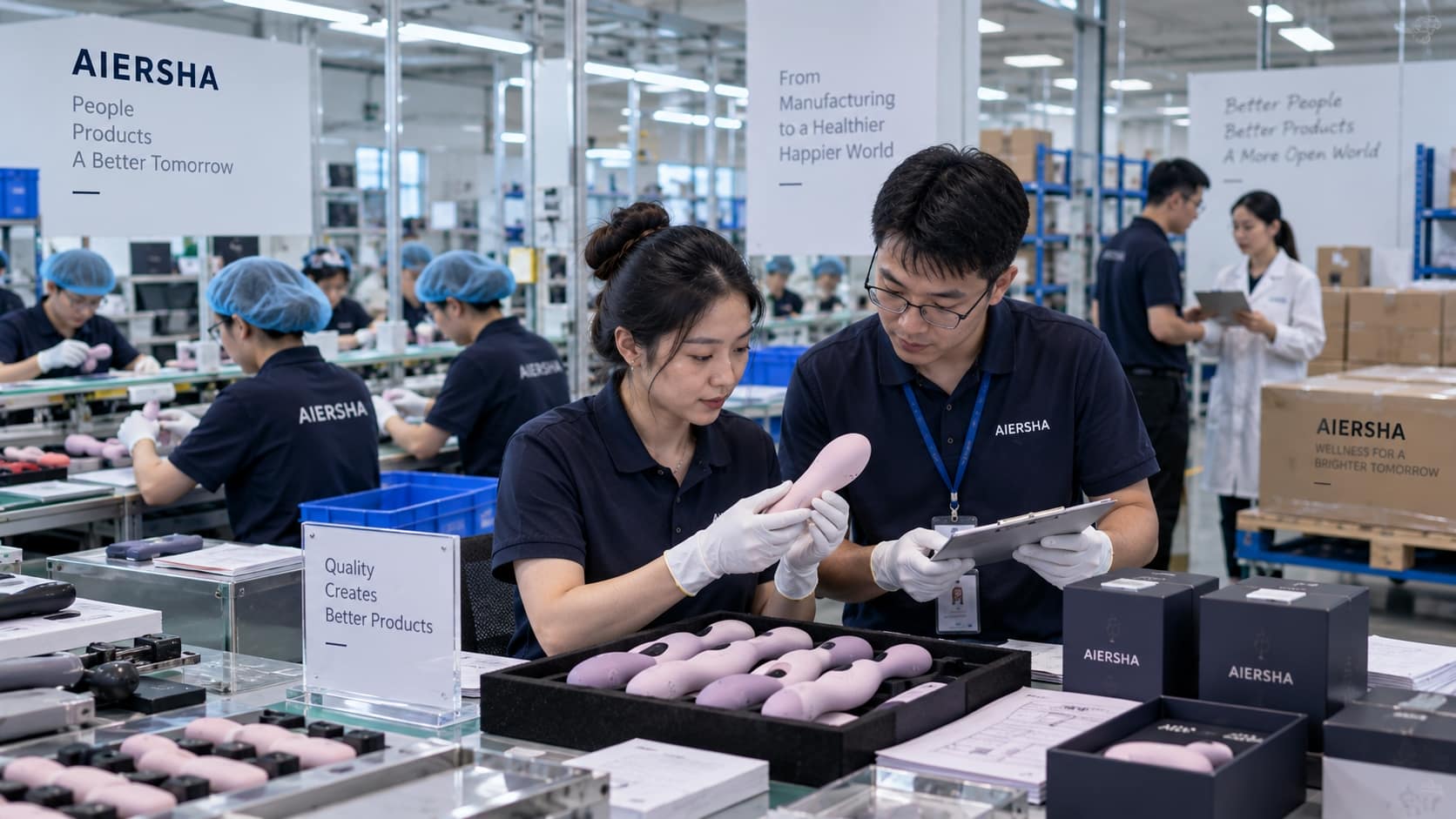
Quality control team inspecting adult wellness products during the manufacturing process
Common OEM and ODM Sourcing Mistakes
Choosing between OEM and ODM is only one part of a successful sourcing project. Buyers should also avoid several common mistakes.
Choosing Only by Unit Price
A low quotation does not show whether development support, materials, testing, packaging, quality control or logistics requirements are equivalent between suppliers.
Starting Without Clear Requirements
Statements such as “I want a custom product” are not enough for an accurate project evaluation. Buyers should define their target market, product requirements, expected quantity, customization and packaging needs as early as possible.
Ignoring Sampling
Samples and prototypes allow buyers to evaluate important aspects of a product before committing to mass production.
Not Clarifying Tooling
If new molds or tooling are required, costs and relevant usage or ownership conditions should be discussed before development starts.
Treating Compliance as an Afterthought
Product and documentation requirements can vary according to the destination market and product type. These requirements should be considered during sourcing and development rather than only when the goods are ready to ship.
Choosing the Right Manufacturing Model for Your Brand
There is no single winner in the OEM vs. ODM comparison.
Choose OEM when differentiation, deeper customization and control over product development are central to your strategy. Choose ODM when speed, lower development complexity and an existing product platform are more important.
Many successful B2B sourcing strategies can use both models at different stages. A company may begin with ODM products to validate a market and later invest in OEM development for products where stronger differentiation creates commercial value.
The right decision therefore depends on your product strategy, budget, target market, expected quantities and launch timeline.
OEM & ODM Manufacturing with AIERSHA
AIERSHA works with B2B customers looking for adult wellness manufacturing, product customization, private-label and wholesale solutions.
If you are evaluating an OEM or ODM project, the first step is to provide as much information as possible about the product, target market, expected quantity and required customization. This allows the project requirements to be evaluated before moving into sampling or production.
Frequently Asked Questions About OEM vs. ODM Sex Toys
Planning an OEM or ODM Project?
Tell AIERSHA about your product idea, target market, expected order quantity and customization requirements. The team can evaluate which manufacturing approach is more suitable for your project.